

The Orchard and the Coming Spring
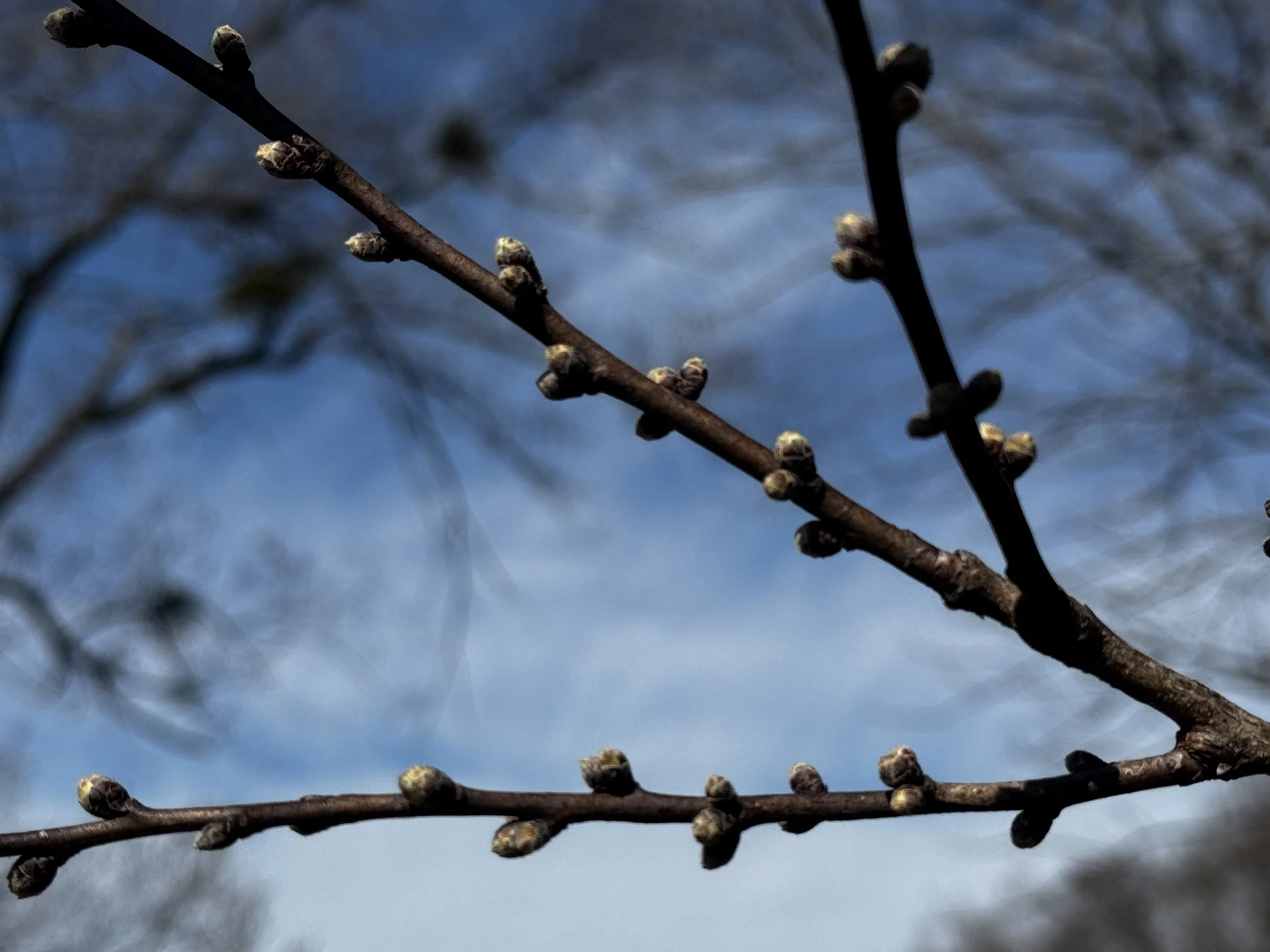
There is a shift that happens before spring fully arrives.
It is not immediate. Not obvious at first. But in the orchard, it can be felt—quietly, steadily—as the season begins to turn.
Branches that have been still all winter begin to soften. Buds form where there was only structure. The landscape holds the promise of what is about to unfold.
At Hilltop Botanicals, this is where the next season of herbal tea begins.
Orchard Blossoms (Before the Bloom)
The orchard does not bloom all at once.
Before blossoms open, there is a stage of anticipation—tight buds forming along each branch, holding what will soon become flowers.
Peach, apple, and early flowering trees begin this process first.
It is a subtle change.
But it marks the transition from winter into spring.
This early stage is essential in understanding how seasonal tea develops. What appears later in the cup—floral notes, orchard fruit, delicate aromatics—begins here.
Before the bloom.
Botanical Observation
This is a time for close observation.
Without leaves, the structure of each tree is still visible, but now layered with small changes—buds swelling, color shifting, texture softening.
In botanical observation, these in-between moments are often the most revealing.
A branch revisited daily shows progression.
A bud changes shape almost imperceptibly.
Light interacts differently with each stage.
This practice informs both botanical art and the way future botanical tea blends are envisioned.
Observation becomes a way of preparing.
A Preview of Spring Tea
As the orchard begins to change, so does tea.
The transition from winter blends to spring herbal tea is gradual. Heavier, warming profiles begin to give way to lighter, more floral compositions.
Early spring teas often include:
• green tea
• delicate floral notes
• orchard-inspired elements
• soft citrus brightness
These teas reflect what is happening outside—subtle, emerging, and full of potential.
At Hilltop Botanicals, each loose leaf tea blend follows this rhythm.
Not forced.
Not rushed.
But shaped by the season as it unfolds.
Closing
Spring does not begin in full bloom.
It begins here.
In the orchard.
In the bud.
In the quiet shift from stillness to movement.
What is coming can already be seen—if you take the time to notice.
And from that moment forward, everything begins to open.
