

Pruning Fruit Trees in Late Winter
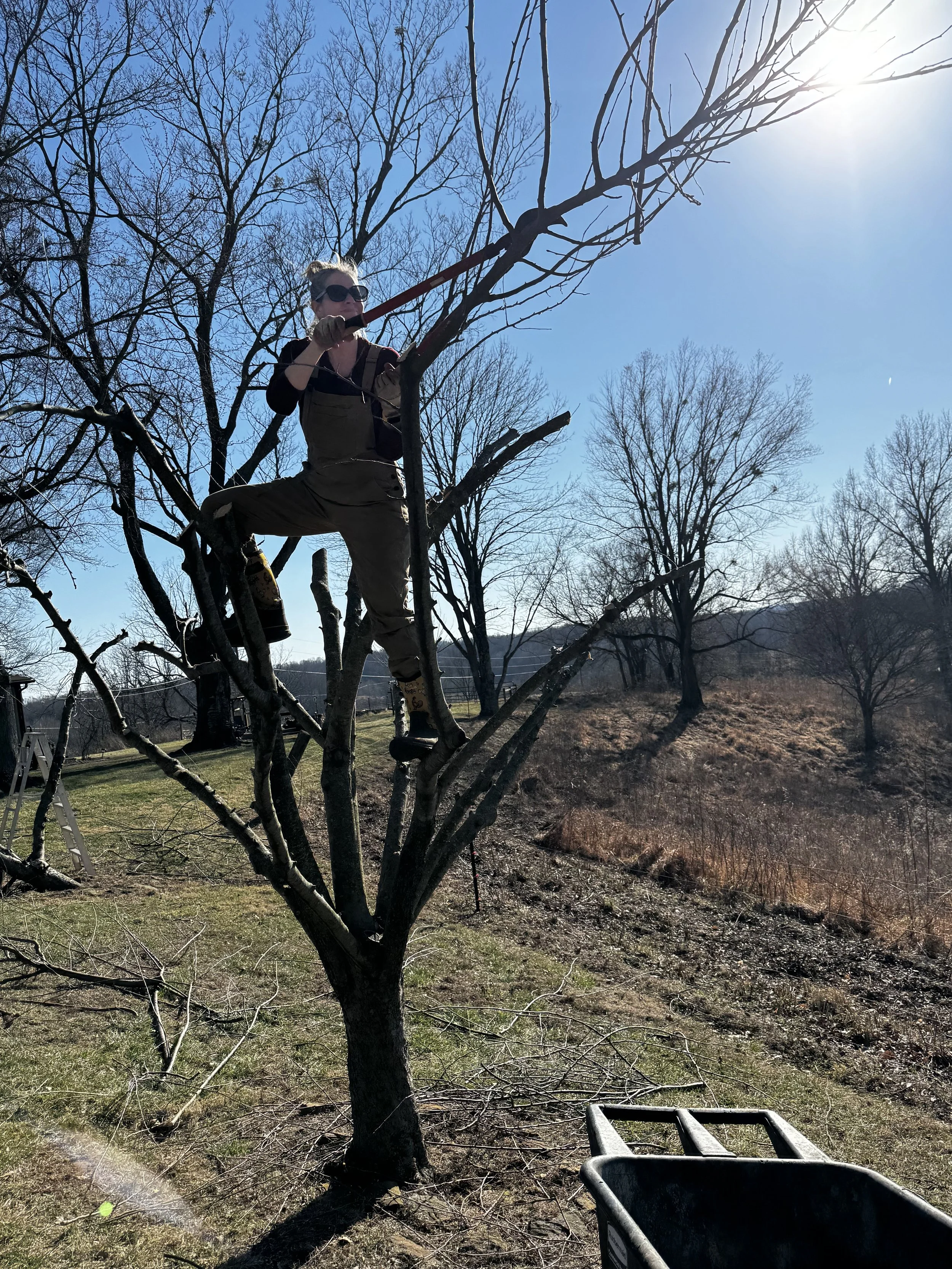
Late winter is a season of structure.
Before the orchard leafs out, before blossoms begin to open, the shape of each tree is revealed. Branches are no longer hidden by growth—they are exposed, making this the ideal time to prune.
At Hilltop Botanicals, this quiet work in the orchard is part of the foundation behind every botanical tea and seasonal blend.
Why Late Winter Pruning Matters
Pruning fruit trees in late winter allows for clarity.
Without leaves, the structure of the tree becomes visible—making it easier to see where growth should be encouraged and where it should be reduced.
This is the best time to:
• Remove dead or damaged wood
• Open the center of the tree for airflow and light
• Shape branches for healthy spring growth
For those tending a small orchard or backyard trees, late winter pruning supports both the health of the tree and the quality of future harvests.
Observing the Structure
Pruning is not just cutting—it is observation.
Each branch tells a story of last season’s growth. Some reach upward, others cross or compete. The goal is not to remove as much as possible, but to guide the tree toward balance.
This practice mirrors the same attention used when creating loose leaf tea blends.
Balance.
Structure.
Space.
What is removed is just as important as what remains.
Orchard to Tea
Fruit trees offer more than fruit.
Blossoms, leaves, and even pruned branches can become part of seasonal work—whether through observation, drying, or future use in herbal tea and botanical tea blends.
Apple blossom, peach leaf, and other orchard elements connect the garden directly to the cup.
This is the beginning of that process.
Winter pruning sets the stage for:
• Spring blossoms
• Summer growth
• Autumn harvest
Each season builds on the last.
A Seasonal Practice
Pruning in late winter is a return to intention.
It is slower than harvest, quieter than planting, but just as important.
A morning in the orchard.
Cold air.
Branches in hand.
And the knowledge that what is done now shapes what comes next.
Closing
Before growth begins, there is structure.
Before abundance, there is careful shaping.
In the orchard, as in tea, the work often starts long before the final result is visible.
And late winter is where that work begins.
