

The Garden Between Seasons: What We're Harvesting, Drying & Planting in Late August
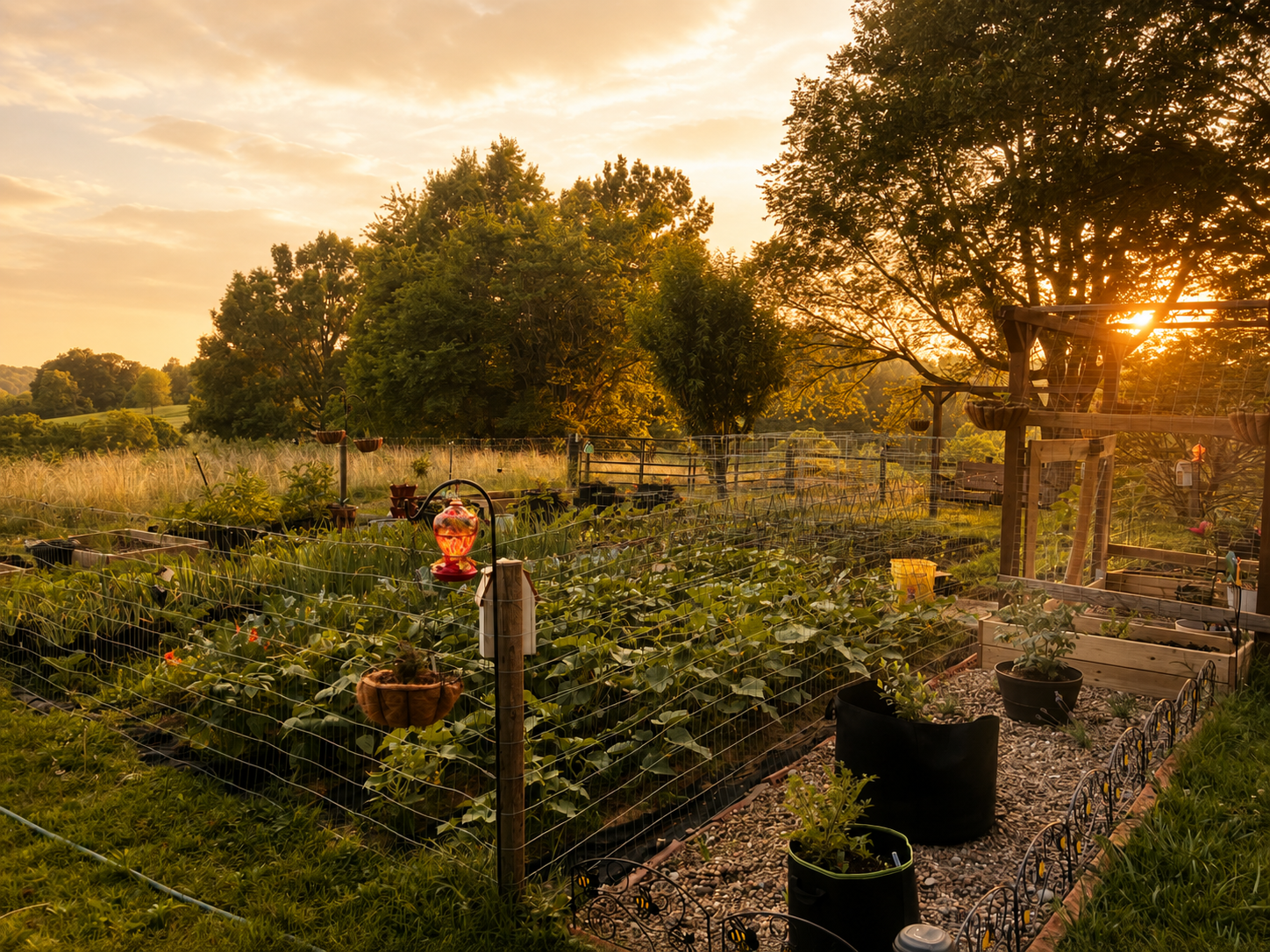
There is a point every August when the garden begins to feel different.
The afternoons are still unmistakably summer. The herbs are fragrant in the heat, pollinators move from flower to flower, and baskets can still come inside full of something worth preserving.
But the light changes.
Morning comes a little later. Evening arrives a little sooner. Some plants are beginning to fade while others seem to have waited all summer for their turn.
This may be my favorite part of keeping a seasonal garden: there is never really an ending. One season simply begins making room for another.
Here at Hilltop, late August is a season of gathering, preserving and beginning again.
Gathering What the Garden Is Still Giving
By this point in summer, the garden doesn't look as orderly as it did in May.
And I think I like it better that way.
Plants have spilled beyond their original boundaries. Flowers have gone to seed. Insects have claimed corners of the garden. Herbs that have been harvested repeatedly throughout the summer continue putting out new growth.
This is the garden after it has been lived in.
Late-summer harvesting is less about collecting everything and more about noticing what is ready.
A handful of lemon balm.
Mint for drying.
Chamomile blossoms tucked into a basket.
Basil destined for the kitchen.
Flowers and leaves that might become part of a future project.
Sometimes what comes inside becomes tea. Sometimes it becomes a recipe. Sometimes it becomes a photograph, a pressed specimen or simply something I wanted to remember.
That is one of the ideas at the heart of Hilltop Botanicals: a garden can give us more than one kind of harvest.
Drying a Little Summer for Later
There is something deeply satisfying about seeing jars begin to fill as summer progresses.
Drying herbs is one of the simplest ways I preserve the garden.
Instead of thinking about preserving an entire harvest at once, I work in small batches. Herbs are gathered when they're ready, inspected carefully and dried before being stored away from heat, moisture and direct light.
Those jars become ingredients for the months ahead.
Some will eventually find their way into tea.
Others belong in the kitchen.
And some are simply reminders of what grew here this year.
You don't need an enormous herb garden to begin doing this. Even a few pots of mint, basil or another favorite culinary herb can become the beginning of a small seasonal pantry.
The Botanical Pantry Begins in the Garden
I've been thinking a lot this summer about the connection between the garden and pantry.
We often think of preserving as something that happens after a huge harvest.
But a botanical pantry can grow much more slowly.
A jar of dried herbs.
An infused honey.
An herb salt.
A botanical sugar.
A favorite tea.
A recipe written down because you know you'll want to make it again.
Over time, those little things become a record of the season.
That idea became a large part of The Herbal Recipe Book, which gathers botanical syrups, infused honeys, herb salts, botanical sugars, teas and other garden-inspired recipes in one place.
The book isn't really about having a perfect pantry.
It's about learning to notice what you already have and finding beautiful, useful ways to preserve it.
Making Room for Autumn
Late August also brings one of my favorite garden contradictions.
While we're harvesting summer, we're planting again.
Kentucky gardeners can continue growing well beyond the traditional summer vegetable season. Cool-season crops can take advantage of the changing temperatures, which means an empty patch where a summer crop has finished doesn't necessarily need to remain empty.
This is the time of year when I start looking at the garden differently.
What has finished?
What needs to be cleaned up?
What could still be planted?
What do I want to remember for next year?
Those observations are just as valuable as the harvest itself.
A garden journal becomes especially useful now because late summer tells us things spring cannot: which plants handled the heat, what grew too aggressively, where shade changed through the season, what pollinators loved and what we actually used.
Those are the notes that make next year's garden better.
Letting Some Things Stay
Not everything needs to be harvested.
That may be one of the harder lessons gardening teaches.
Some flowers belong to the bees.
Some seed heads can remain.
Some imperfect leaves aren't hurting anything.
And sometimes the most beautiful thing happening in the garden has absolutely nothing to do with what I can take from it.
One of my favorite moments this summer was simply finding a bee resting among the flowers.
There was nothing to harvest.
Nothing to sell.
Nothing to fix.
Just something worth noticing.
A Season Doesn't Have to Be Rushed
Autumn products are appearing in stores everywhere already.
The garden is less interested in the retail calendar.
Here, it is still August.
There are still summer herbs to gather.
There are still flowers opening.
There are still warm evenings outside.
And there is also the first quiet suggestion that another season is coming.
I don't want to rush either one.
For now, I'll keep gathering what is ready, drying a little for later, planting a few things for fall and watching the garden change one day at a time.
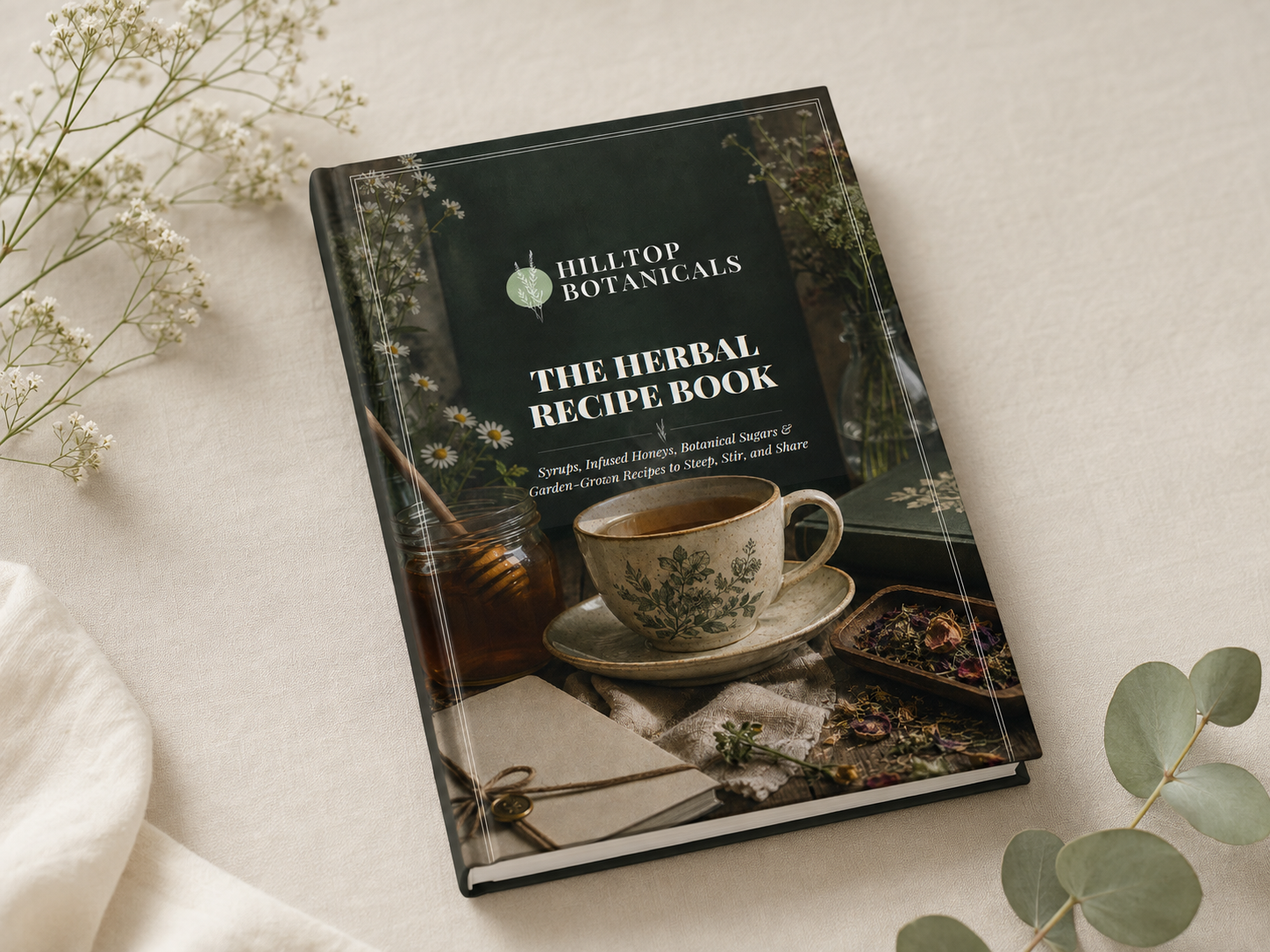
Want to bring a little more of the garden into your kitchen?
Explore The Herbal Recipe Book for botanical syrups, infused honeys, herb salts, botanical sugars, teas and other garden-inspired recipes—or browse Hilltop's seasonal teas and botanical offerings.
