

How to Brew Loose Leaf Tea
A Beginner's Guide to Better Flavor, Simpler Rituals, and a More Enjoyable Cup
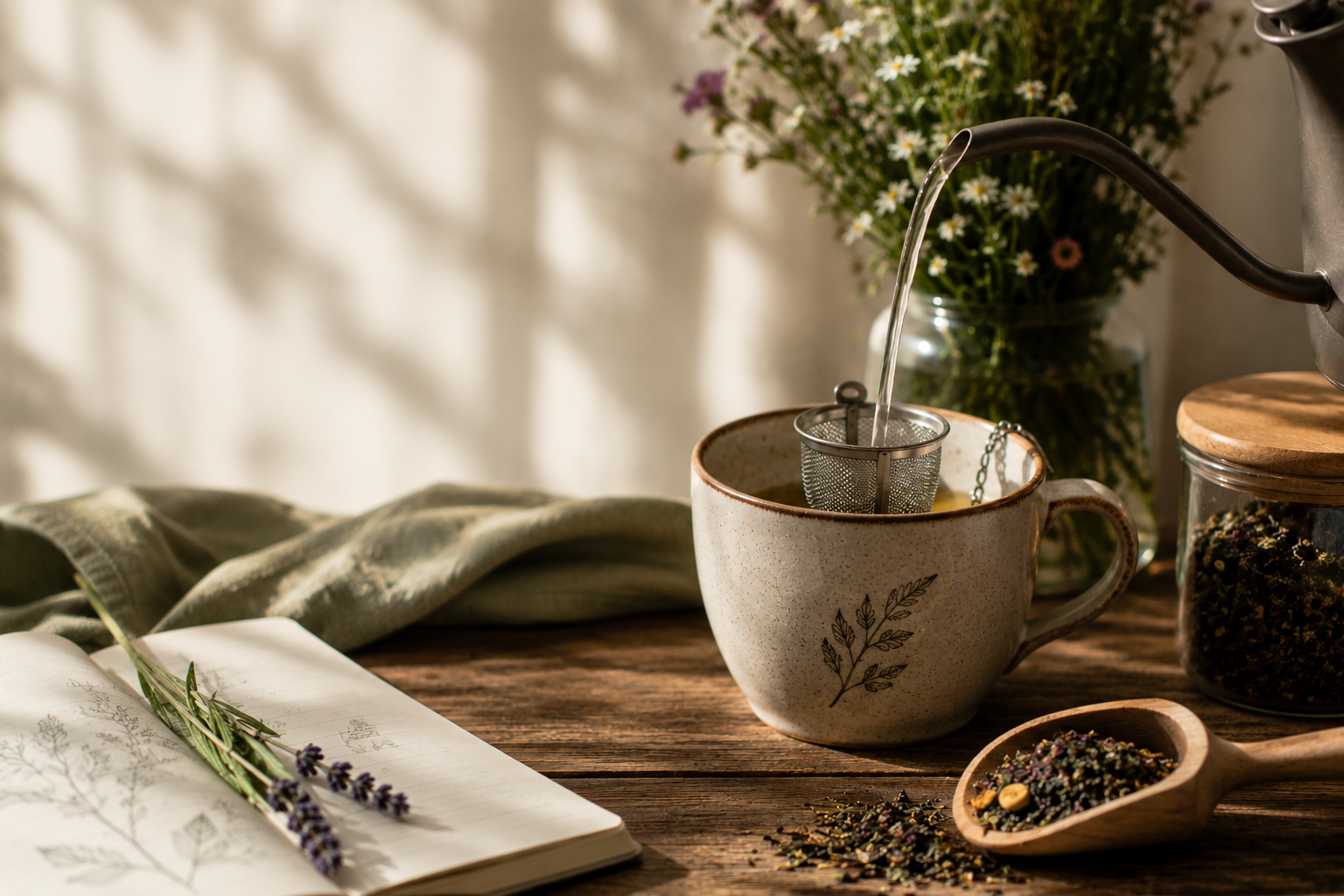
There is something quietly satisfying about preparing a cup of loose leaf tea. It asks you to slow down, if only for a few moments. Measuring fragrant leaves, warming water, watching flowers unfurl, and waiting patiently while the tea steeps transforms an ordinary drink into a small daily ritual.
For many people, loose leaf tea can seem intimidating at first. There are questions about water temperature, steeping time, tea infusers, and how much tea to use. Yet brewing loose leaf tea is remarkably simple once you understand a few basic principles.
Whether you're exploring tea for the first time or looking to improve your daily cup, this guide will help you brew loose leaf tea with confidence and enjoy the full character of every blend.
Why Choose Loose Leaf Tea?
Unlike many commercial tea bags, loose leaf tea contains whole leaves, petals, herbs, spices, and botanicals that have room to expand as they steep.
When ingredients remain whole, they release their aroma and flavor more gradually, producing a fuller and more nuanced cup.
Loose leaf tea often offers:
Better aroma
Richer flavor
More visible ingredients
Greater control over brewing strength
A more enjoyable tea-making experience
Brewing loose leaf tea isn't about perfection—it's about allowing the ingredients to express themselves naturally.
What You'll Need
The good news is that you don't need expensive equipment.
A simple setup includes:
Loose leaf tea
Fresh water
A kettle
A tea infuser, tea strainer, or teapot
Your favorite mug
Many tea lovers eventually collect beautiful teapots and accessories, but a simple infuser and mug are all you need to begin.
Start with Fresh Water
Good tea begins long before the leaves meet the water.
Because tea is almost entirely water, the quality of your water has a significant impact on flavor.
Fresh, cold water generally produces a brighter, cleaner cup than water that has been repeatedly boiled.
If your tap water has a strong chlorine taste or noticeable mineral flavor, filtered water can make a meaningful difference.
Measure Your Tea
One of the most common questions beginners ask is:
How much loose leaf tea should I use?
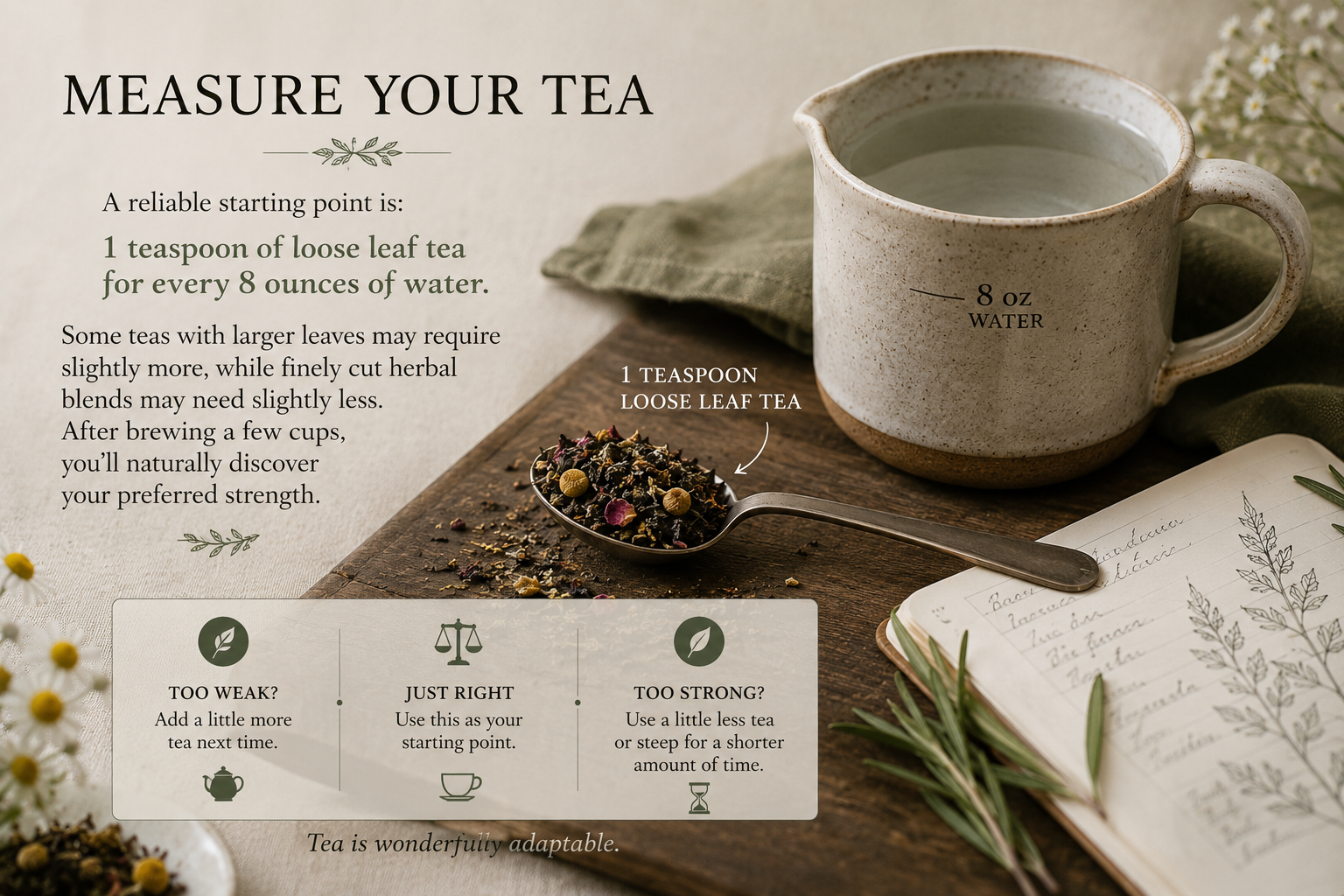
A reliable starting point is:
1 teaspoon of loose leaf tea for every 8 ounces of water.
Some teas with larger leaves may require slightly more, while finely cut herbal blends may need slightly less. After brewing a few cups, you'll naturally discover your preferred strength.
If your tea tastes weak, add a little more tea next time.
If it's too strong, reduce the amount slightly or shorten the steeping time.
Tea is wonderfully adaptable.
Water Temperature Matters
Not all teas enjoy the same water temperature.
Using water that's too hot can make delicate teas taste bitter, while water that's too cool may not fully extract the flavors from herbal ingredients.
A simple guide:
Green Tea
175–185°F
Steep for 2–3 minutes
Green tea is delicate. Slightly cooler water helps preserve its smooth, fresh flavor.
Black Tea
205°F
Steep for 3–5 minutes
Black teas benefit from hotter water, allowing their fuller body and deeper flavor to develop.
Herbal Tea (Tisanes)
205°F
Steep for 5–7 minutes
Herbal teas typically contain flowers, leaves, roots, fruits, or spices rather than traditional tea leaves. Hot water helps extract the full character of these botanical ingredients.
Warm Your Mug
This simple step is often overlooked.
Before brewing, pour a little hot water into your mug or teapot for about 30 seconds.
Discard the water before adding your tea.
A warmed vessel helps maintain brewing temperature and creates a more consistent cup.
Let the Leaves Expand
Loose leaf tea needs room.
Rather than tightly packing your infuser, fill it only about halfway.
As the leaves absorb water, they'll naturally open and expand.
Giving them space allows water to circulate freely, extracting more flavor and aroma.
Watching flowers bloom and leaves unfold is one of the simple pleasures that makes loose leaf tea so enjoyable.
Be Patient While Steeping
The steeping time shapes the final cup.
Removing the tea too early may produce a weak brew, while leaving it too long can create excessive bitterness in some teas.
Use these general guidelines:
-
Temperature 175–185°F
Steep 2-3 minutes
-
Temperature 205°F
Steep 3-5 minutes
-
Temperature 205°F
Steep 5-7 minutes
If you enjoy stronger tea, try adding a little more tea rather than dramatically extending the steeping time.
Taste Before You Change Anything
Every tea is unique.
Rather than immediately adding sweeteners or milk, take a moment to enjoy your first sip exactly as it was brewed.
Notice:
Floral notes
Herbal aromas
Citrus brightness
Gentle sweetness
Earthy depth
Warming spices
Many loose leaf teas reveal surprising complexity without needing anything added.
Honey Pairings
If you'd like a touch of sweetness, honey complements many teas beautifully.
Rather than overpowering the tea, a small drizzle can gently round out the flavors.
Some favorite combinations include:
Floral herbal teas with lavender-infused honey
Mint blends with wildflower honey
Green teas with light spring honey
Rich black teas with darker local honey
The goal is balance rather than sweetness.
Brewing Multiple Infusions
Many loose leaf teas can be brewed more than once.
After enjoying your first cup, simply refill the infuser with hot water.
The second infusion often develops different characteristics:
Softer flavors
Gentler aromas
More subtle botanical notes
If making a second infusion, increase the steeping time by one or two minutes.
Common Beginner Mistakes
Everyone makes a few mistakes when learning to brew tea.
Fortunately, they're easy to correct.
Using boiling water for every tea
Delicate green teas often become bitter when brewed with water that's too hot.
Overfilling the infuser
Leaves need room to expand.
A crowded infuser limits flavor extraction.
Steeping too long
Long steep times don't always produce better tea.
Often they simply create harsher flavors.
Using old tea
Tea gradually loses aroma over time.
Store it in an airtight container away from heat, moisture, and direct sunlight.
Forgetting to enjoy the process
Tea isn't only about the finished cup.
The measuring, pouring, waiting, and brewing are all part of the experience.
Creating a Tea Ritual
One of the joys of loose leaf tea is how naturally it fits into everyday life.
Your ritual doesn't need to be elaborate.
It might simply be:
Brewing tea before the rest of the house wakes.
Reading a chapter of a favorite book while your tea steeps.
Watching the evening light fade from the porch.
Taking a quiet break in the middle of a busy afternoon.
Sharing a pot of tea with a friend.
These small moments become anchors in the rhythm of the day.
Caring for Your Tea
To keep your tea tasting its best:
Store it in an airtight container.
Keep it away from direct sunlight.
Avoid heat and humidity.
Don't store it beside strongly scented spices or coffee.
Use clean, dry utensils when measuring.
Proper storage helps preserve the aroma and flavor of your tea for months.
The Joy of Brewing
Loose leaf tea doesn't require special expertise—only curiosity and a willingness to slow down for a few minutes.
With each cup, you'll begin to notice subtle differences in flavor, aroma, and seasonality. You'll learn which blends you reach for on bright summer mornings, which accompany quiet afternoons, and which become part of your evening routine.
There is no single "perfect" way to brew tea. The best cup is the one prepared in a way that you genuinely enjoy.
At Hilltop Botanicals, we believe tea is more than something to drink. It's an invitation to notice the changing seasons, appreciate the beauty of botanicals, and create simple rituals that bring a little more intention to everyday life.
So warm the kettle, measure a spoonful of tea, and allow yourself a few quiet moments.
The leaves will do the rest.
