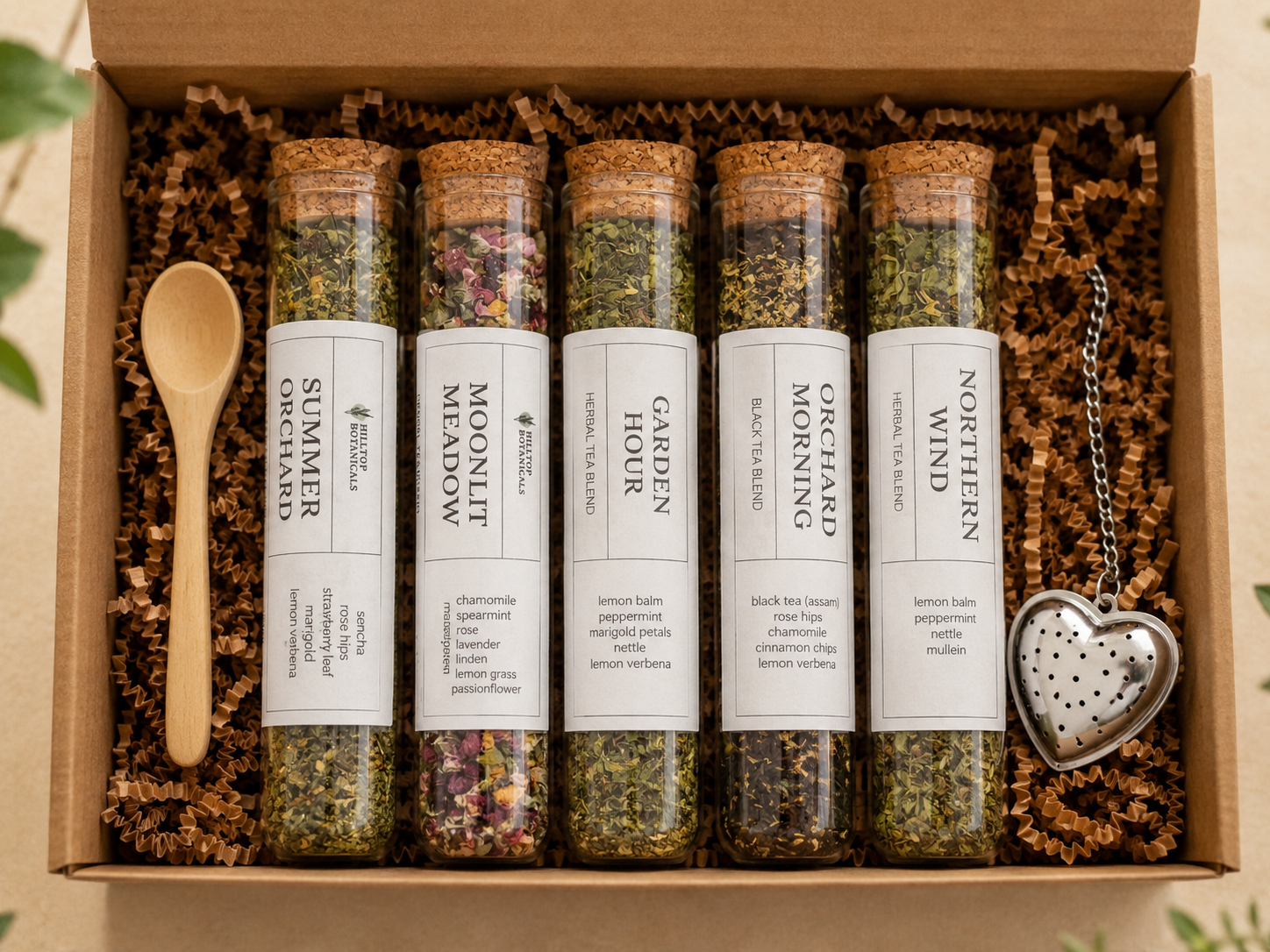
A Little Honey with Your Tea: A September Ritual From Garden to Cup
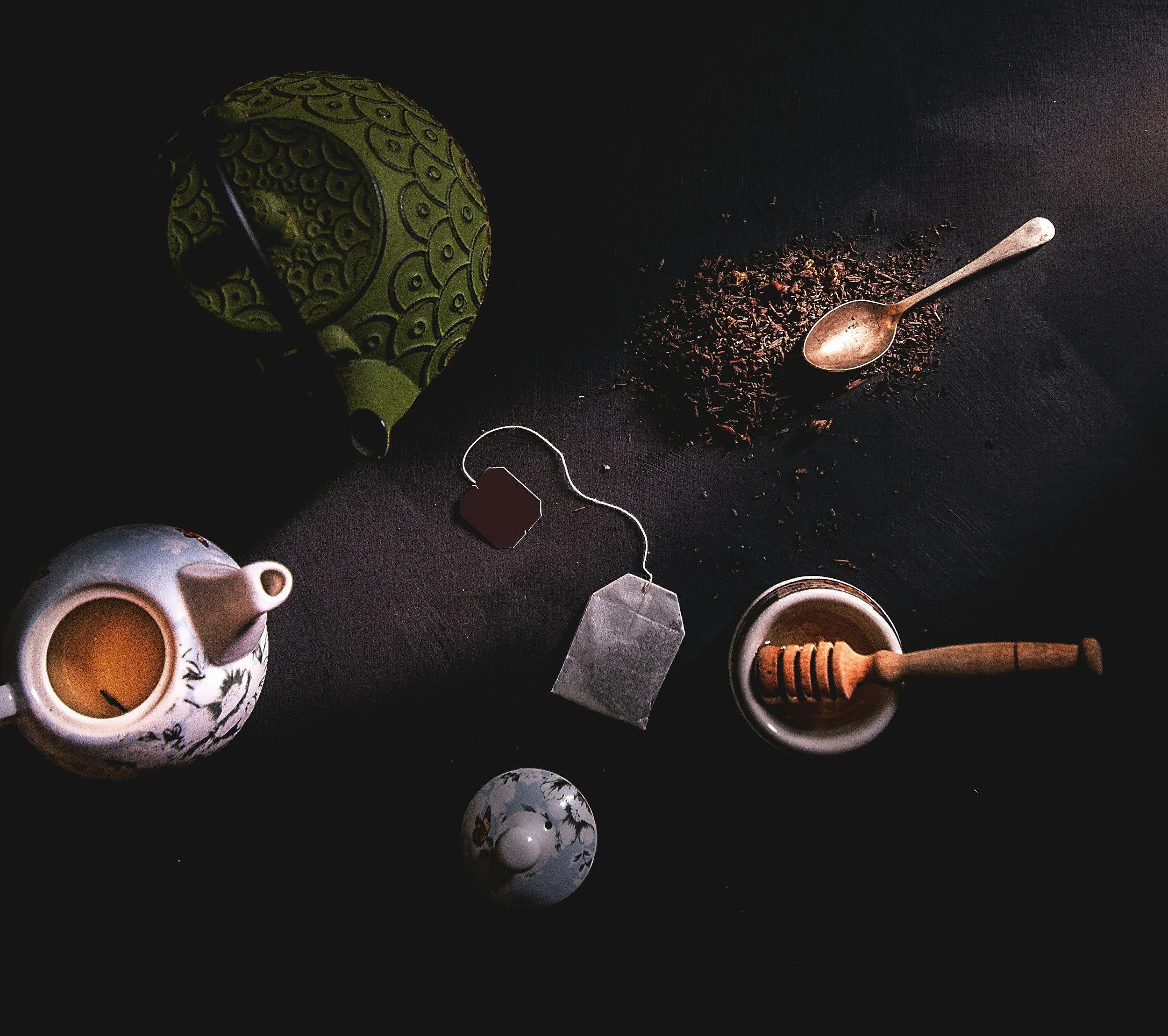
There are certain combinations that simply seem to belong together.
Herbs and gardens.
Flowers and bees.
Tea and honey.
September happens to be National Honey Month, which feels especially fitting at Hilltop because this is also the time of year when the garden begins changing.
The flowers aren't finished.
The bees are still moving through them.
There are herbs left to gather.
But mornings are becoming cooler, and I find myself reaching for a warm cup of tea a little more often.
Adding a spoonful of honey somehow feels like part of that transition.
Not quite autumn.
Not quite summer.
Just September.
Honey Begins With Flowers
It is easy to look at a jar of honey and forget where it began.
Flowers.
Thousands and thousands of visits to flowers.
Kentucky gardens, farms and wild spaces provide nectar and pollen throughout the growing season, and honey bees also provide important pollination for Kentucky crops including pumpkins, melons, orchard crops and berries. Crop Diversification Center
That's one reason I've become increasingly interested in letting portions of the Hilltop garden remain a little imperfect.
Not every flower needs to be cut.
Not every fading bloom needs to disappear immediately.
Sometimes the garden is doing something useful even when it isn't doing something for us.
A bee moving between late-summer flowers may be one of the smallest things happening in the garden.
It may also be one of the most important.
Finding the Right Honey for Tea
Honey doesn't need to overwhelm a cup of tea.
I actually prefer when it doesn't.
A small amount can add sweetness while still allowing you to taste the herbs and botanicals in the blend.
For lighter floral teas, I tend to think about honey the same way I think about any other ingredient: start small.
Taste.
Then add more if you want it.
A delicate tea can change completely under too much sweetness.
More robust blends can usually hold their own a little better.
There isn't one correct amount.
The best cup is simply the one you enjoy drinking.
Try the Tea Before Adding Anything
This may be my favorite piece of advice when someone is trying a new loose-leaf tea.
Take the first sip plain.
It gives you a chance to notice what's actually in the cup.
Is it floral?
Bright?
Earthy?
Minty?
Soft?
Then decide whether it needs anything at all.
Sometimes I add honey.
Sometimes I don't.
And sometimes tasting a tea without anything added makes me notice an ingredient I hadn't paid attention to before.
Tea doesn't have to be complicated to be interesting.
Beyond the Teacup
Honey has also become part of the botanical pantry I'm slowly building at Hilltop.
It doesn't have to stay beside the tea kettle.
Honey can become part of vinaigrettes and marinades, be drizzled over fruit, added to baked goods or paired with herbs and other culinary botanicals.
It can also become an infused honey.
That's the idea that interests me most: taking a familiar pantry ingredient and looking at it through the garden.
What could be added?
What flavors belong together?
What did we grow that could become something else?
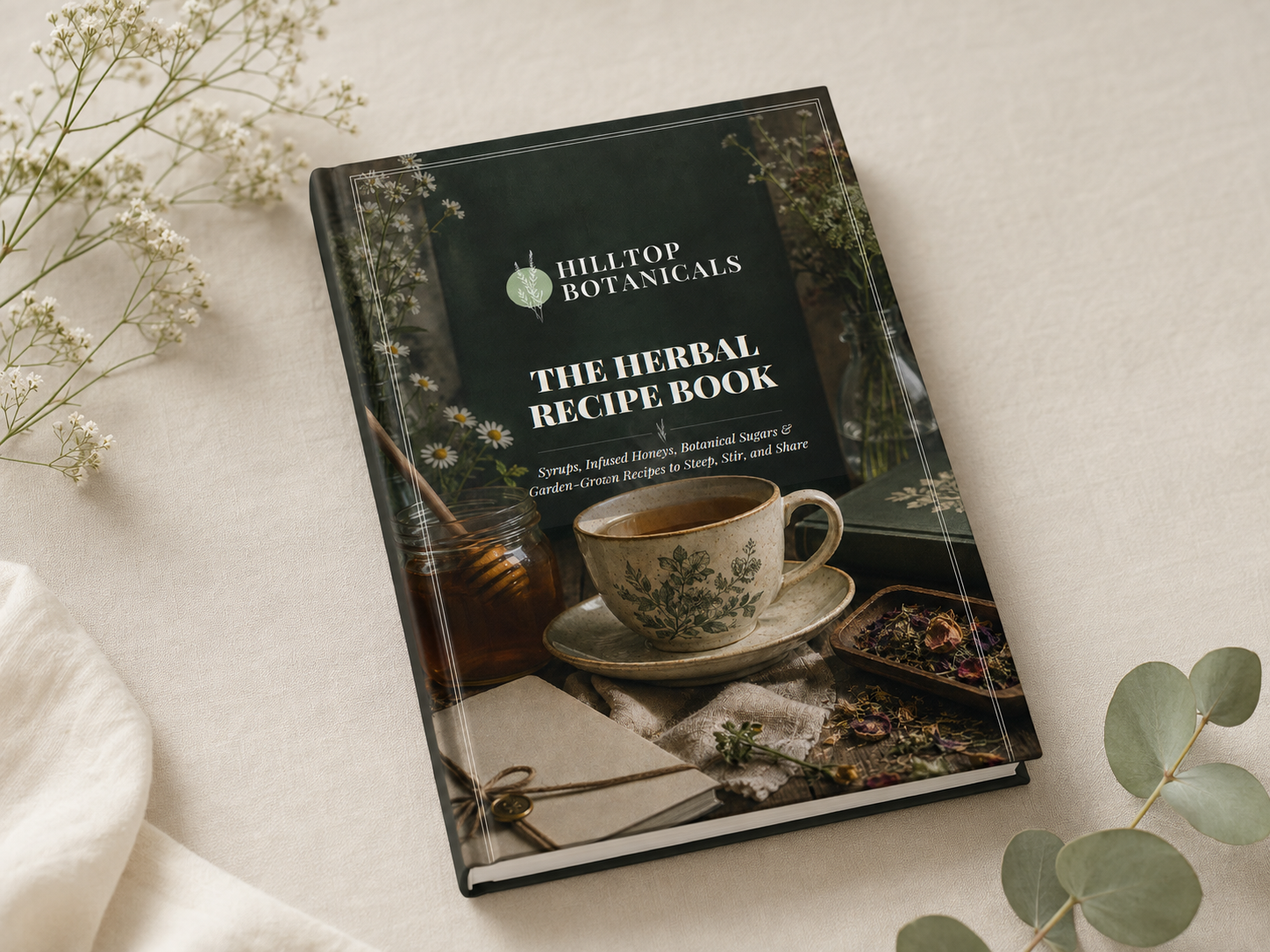
That curiosity is behind many of the recipes I've collected in The Herbal Recipe Book—botanical syrups, infused honeys, herb salts, botanical sugars, teas and other ways of bringing the garden into the kitchen.
September's Garden Is Still Feeding the Bees
One of the easiest things we can do for pollinators is simply allow something to keep blooming.
September gardens may look less polished than they did in May.
Mine certainly does.
But flowers that remain can still have value.
So I'm resisting the urge to clean everything up at once.
Some things can stay.
Some flowers can belong to the bees.
Some seed heads can remain for later.
The garden doesn't need to look finished just because summer is ending.
A Simple September Tea Ritual
If you want to mark this in-between season without rushing into pumpkins and sweaters quite yet, make it simple.
Choose a tea.
Brew it slowly.
Taste it first.
Add a little honey if you'd like.
Then take it outside.
Notice what is still flowering.
Notice what has changed.
Notice the light.
September doesn't need much decoration.
The season is already happening.
And sometimes a cup of tea is enough reason to sit still long enough to see it.