

Leave It Standing
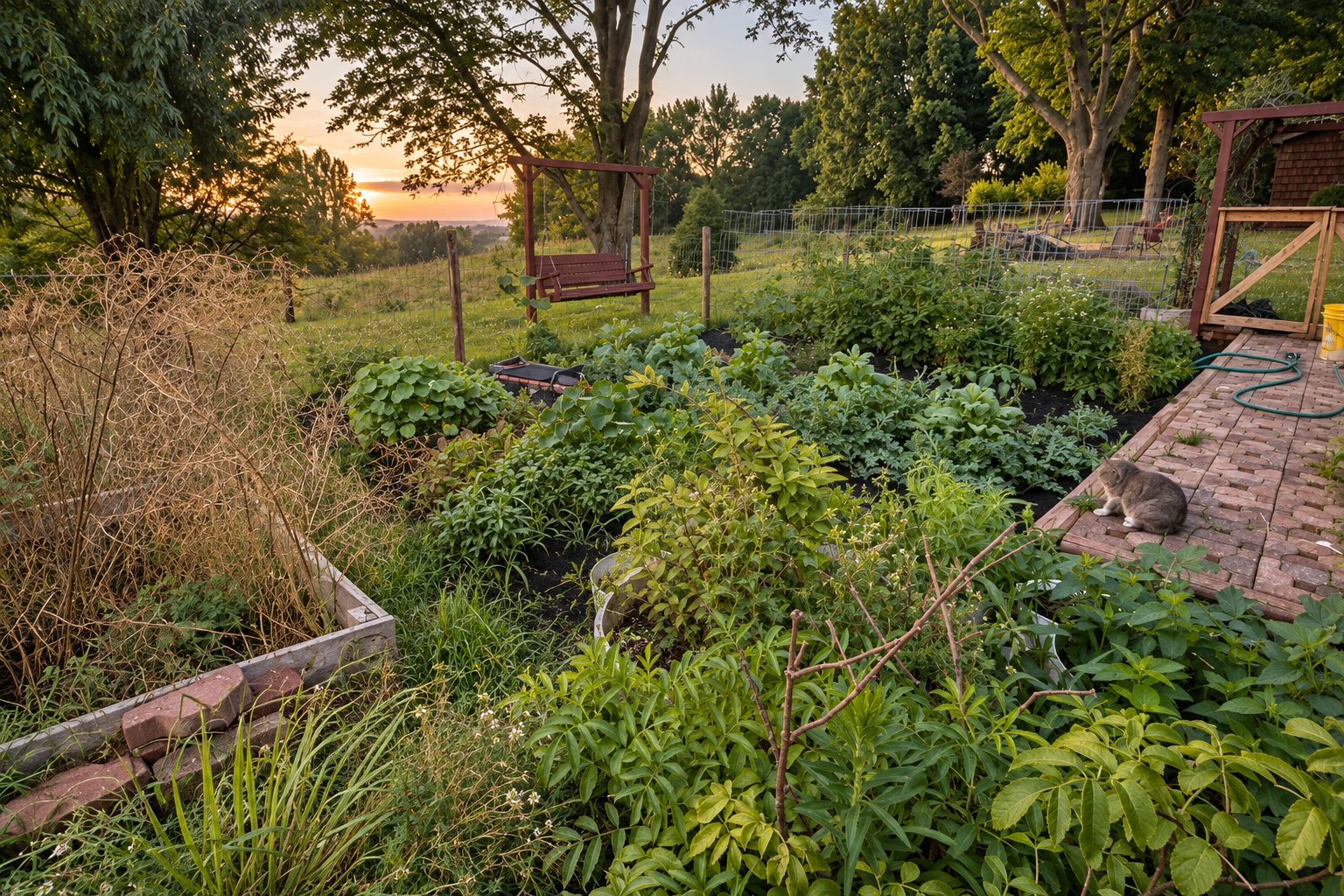
The garden at Hilltop Botanicals. AI-enhanced editorial image based on Heather’s original garden photograph.
By late October, the afternoon light reaches the garden at a different angle. Plants that once formed a mass of green leaves and flowers begin revealing their individual shapes. Stems, seed heads, and the spaces between plants become easier to see.
This is the part of the season when I start looking at the garden differently. Some plants have finished flowering, while others still hold their color. The work begins shifting from growing and gathering toward deciding what should remain in place.
It can be tempting to cut everything back and leave the beds tidy for winter. I have been learning to pay more attention before reaching for the pruners, because the garden still has useful work to do after the flowers are gone.
The Value of a Seed Head
A flower changes considerably once it finishes blooming. Petals fall, the center begins drying, and the structure that remains may contain seeds for the next growing season.
Some healthy seed heads can also provide food for birds. Coneflowers and black-eyed Susans are familiar examples, although the plants and visitors will vary from garden to garden. The University of Maryland Extension includes these among the perennials whose seeds can support birds.
I enjoy seed heads as photographic subjects, too. Their shapes often become more interesting once the petals have fallen away. Details that were hidden during flowering become visible, including the arrangement of seeds and the texture of the remaining flower structure.
Sometimes a photograph is enough. Other times, a small sketch makes me notice something I would have missed. Leaving suitable seed heads standing keeps those details available to study as the season changes.
Why Some Stems Should Remain
Dried stems deserve a closer look as well. Certain native bees use hollow or pithy stems for nesting. Leaving suitable stems undisturbed preserves potential habitat, although not every dry stalk is a nest.
Some stems become hollow as they dry, while others remain firm and fibrous. Their surfaces change color, and the places where leaves once attached become easier to examine. These are useful details for botanical photography and illustration.
The Xerces Society recommends retaining winter habitat such as standing stems and leaf litter. Its Leave the Leaves guidance is a useful starting point for understanding what may be sheltered in a garden that looks quiet.
Fallen Leaves Have a Place
Fallen leaves create a ground layer where some insects spend winter. Keeping whole leaves in suitable beds or designated areas can preserve that shelter. Leaves do not have to remain on a walkway or lie in a thick mat across the lawn to be useful.
When leaves need moving, consider gently raking them into an appropriate garden area rather than removing them from the landscape entirely. Avoid shredding leaves intended as winter habitat, since insects or eggs may already be among them.
I also like the way leaves change a garden visually. Their colors become more muted as they dry, and their surfaces develop a different texture. A curled leaf can be just as interesting to study as a fresh green one.
What Still Needs Attention
Leaving habitat is not the same as leaving every plant untouched. Material showing disease, plants with serious pest problems, and invasive plants that are about to scatter seed may need a different approach. Keep paths safe and consider the needs of the individual plant and site.
University of Maryland Extension recommends removing infected plant debris and controlling the seed heads of invasive plants. If something looks unhealthy, identify the problem before deciding whether to leave it, compost it, or dispose of it. A local extension office can help with an uncertain diagnosis.
The goal is thoughtful cleanup, not a rule that every stem must stay or every bed must be bare.
Observe Before Collecting
Autumn also brings decisions about what is worth bringing indoors. Some botanical material can be photographed or recorded in a journal without collecting it. A seed head left outside can remain available to wildlife and become a subject to revisit later.
A photograph can preserve the color of a leaf before it changes further. A written note can record where a plant was growing and when its flowers finished. There is a great deal to learn without removing anything.
I keep culinary and tea ingredients separate from material gathered for observation or decoration. A plant's appearance alone is never enough to establish that it is safe for food. Accurate identification and appropriate sourcing, harvesting, drying, and storage all matter.
Keep a Record of the Changing Garden
A garden journal gives me a reason to return to the same plants throughout the year. A flower photographed in June may look entirely different in October. Its seed head may become the most recognizable part that remains.
A useful field note can be simple: the date, a photograph or sketch, and a few observations about the plant's structure or surroundings. If its identification is uncertain, record that uncertainty rather than guessing.
For drawing practice, The Hilltop Botanical Sketchbook offers another place to keep those observations together.
This approach also helped shape the Pollinator Field Collection. The digital printable collection includes photographic botanical and pollinator art, garden observation field cards, a Seasonal Bloom Record, and the late-season guide Leave It Standing. No physical collection is mailed.
The Garden Continues Into Winter
There will be more cleanup to do before winter arrives. But a dried stem catching afternoon light, a seed head silhouetted against the sky, and leaves settling beneath plants are still parts of the garden's story.
By the time I return indoors and put the kettle on, I often have a few more observations worth keeping. The garden may be preparing for winter, but it continues offering something to study.
Explore the Pollinator Field Collection for printable resources to help record the changing garden.
