

7 Systems That Make Market Season Easier for a Small Product Business
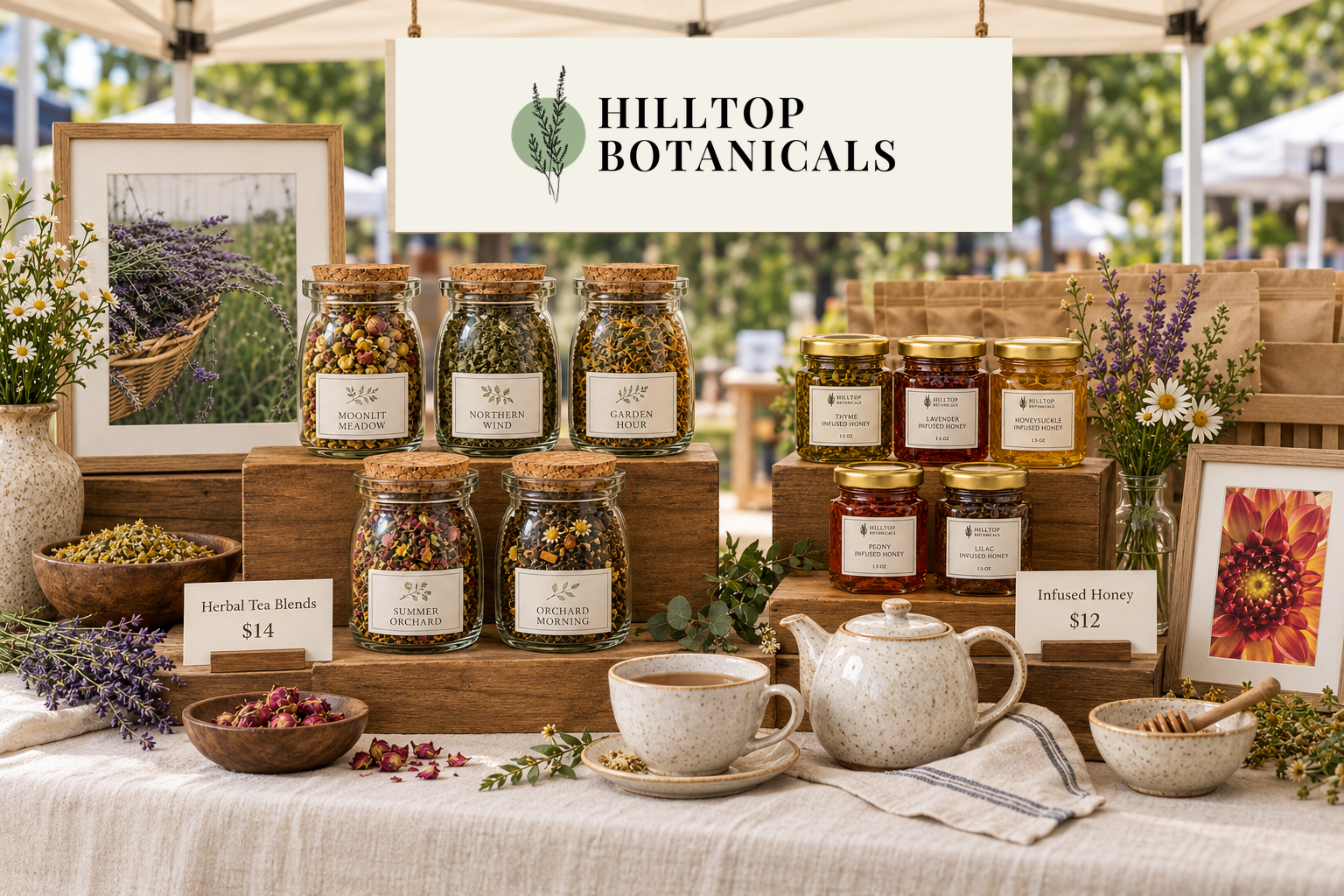
A finished market table can make a small business look simple. The jars are lined up, the prices are easy to read, the signs stand where they belong, and everything seems calm. That calm is built days earlier, out of a lot of small decisions that nobody walking past the booth ever sees.
Hilltop Botanicals begins with herbs, flowers, tea, honey, and the garden. Running it requires something less picturesque: inventory counts, pricing, expense tracking, signs, packing lists, production schedules, marketing, and some way to remember what worked last time. Over the past few seasons I've learned that market weeks get much easier once I stop rebuilding all of that from scratch before every event.
These are the seven systems I rely on most.
1. Know what each product actually costs
It's easy to think about a product in terms of its main ingredient. Tea is herbs and flowers; honey is honey; a printed book is paper and ink. The real cost is usually much broader. It includes packaging, labels, printing, payment fees, market fees, samples, display materials, and the time it takes to make, pack, transport, and sell each item.
Knowing those numbers doesn't turn every decision into a spreadsheet exercise. It gives you better information when you're deciding what to make, what to retire, what to bundle, and what deserves more room on the table.
2. Build an inventory system before you need it
Inventory is much harder to organize once market season is already underway. The simplest version I've found answers three questions: what do I have, what's running low, and what needs to be made or ordered next?
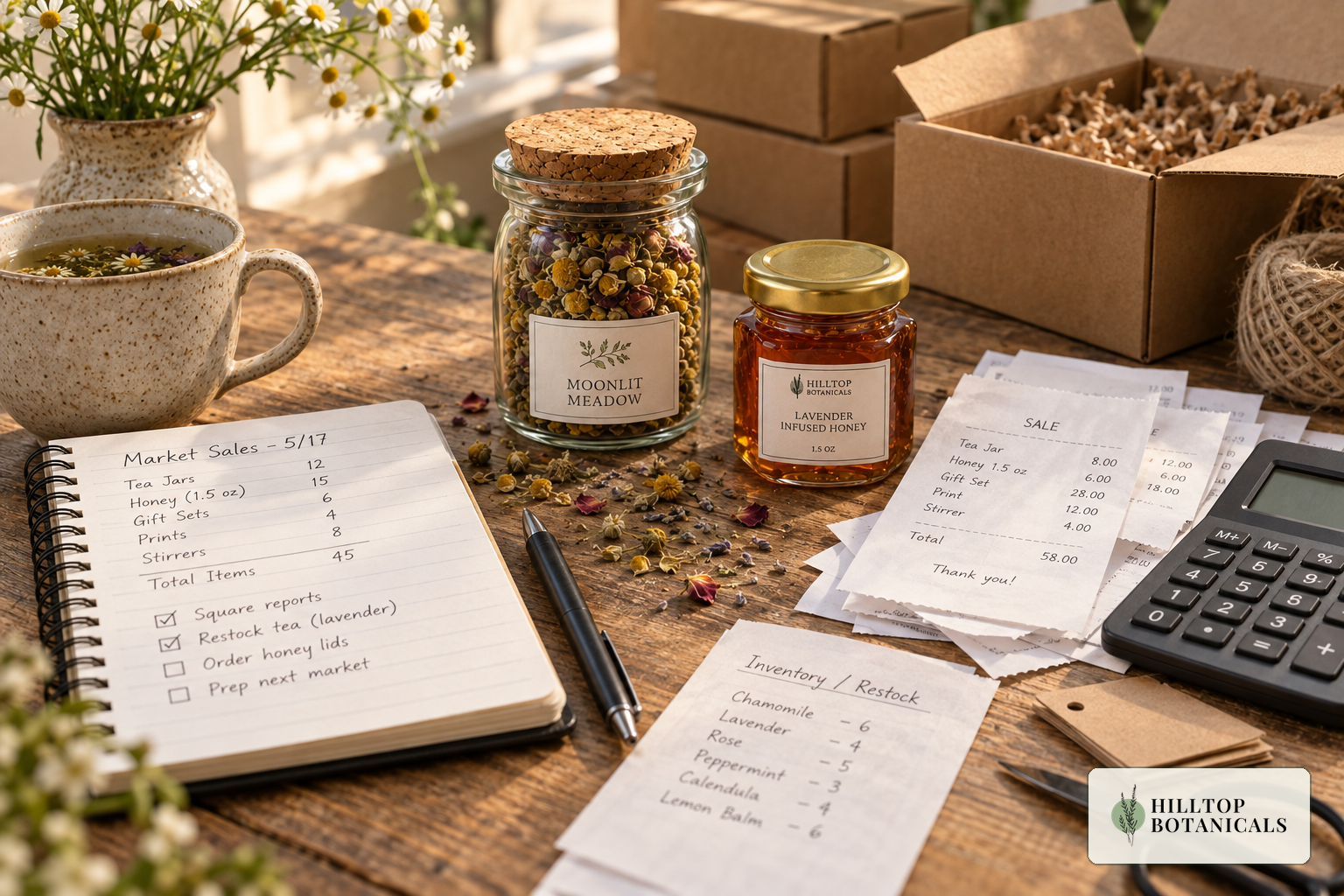
For Hilltop, that means checking tea, honey, jars, labels, packaging, books, and market supplies. The format matters less than having one place where the information lives. When I can see inventory clearly, planning production stops being guesswork.
3. Track the real cost of attending a market
The booth fee is only one line in the cost of a market day. There's also fuel, printing, packaging, samples, display supplies, food, and payment processing fees. Each one may feel minor on its own; together they can change how an event actually performed.
I've started treating each market as its own small project. What did it cost to attend? What sold, and what drew attention without selling? What did I buy specifically for this event, and what can I reuse? Those questions let me compare markets fairly instead of judging them only by the total in the cash box at the end of the day.
4. Create signs you can reuse
One of the most useful things you can do for future market weeks is build a small library of reusable signs: prices, payment methods, QR codes, product information, samples, and collections. Before each event, update only what has changed.
The same idea applies to visual style. When signs share typography, spacing, color, and tone, the whole booth looks intentional without needing extra decoration. Good signage doesn't have to be elaborate. It has to be easy to read from a few steps away.
5. Decide what customers should notice first
A booth can hold beautiful products and still be hard to shop, usually because everything competes for the same attention. Before a market, I decide what someone walking past the Hilltop table should understand within a few seconds.
For me, tea comes first, and the botanical character of the business should be obvious right away. Prices should be easy to find, there should be a simple first purchase for someone who's just curious, and there should be a clear way to find Hilltop again after the market ends. Once those priorities are set, deciding where everything goes gets much easier.
6. Build a simple marketing rhythm
Market marketing works better as a rhythm than as a last-minute push the night before. A few weeks out, mention where you'll be. Closer to the date, show what you're making and preparing. A few days before, share the practical details: date, time, location, and what you're bringing. During the event, capture real photos and video, and afterward, share what you learned or what people responded to.
Most of the useful content comes from work you're already doing. There's no need to invent a separate version of your business for social media; documenting the real one is usually more interesting anyway.
7. Write down what you want to repeat
When I get home from a market, I always assume I'll remember the details. I rarely do. That's why I write post-market notes while the day is still fresh: what sold, what people picked up, which questions came up more than once, whether the pricing was easy to understand, whether anything was hard to see, and what I brought too much or too little of.
Even a few lines make the next market easier, and over a season those notes quietly turn into systems.
The structure behind the botanical work
What people see of Hilltop is mostly tea, honey, herbs, flowers, garden photographs, and market displays. What they don't see is the structure holding it all up. That structure doesn't have to make a creative business feel corporate; its whole purpose is to make the creative work easier to keep doing.
That idea has shaped another part of my work, too. Through H. Doucette Studio, I've been turning the systems I use behind product-based work into practical tools for makers, market vendors, homesteaders, and other small businesses, so they can spend less time rebuilding the business side and more time on the work they started the business to do.
Building your own handmade, botanical, homestead, or market business? Explore market, pricing, inventory, marketing, and planning tools from H. Doucette Studio.
Grow the garden. Build the business.
